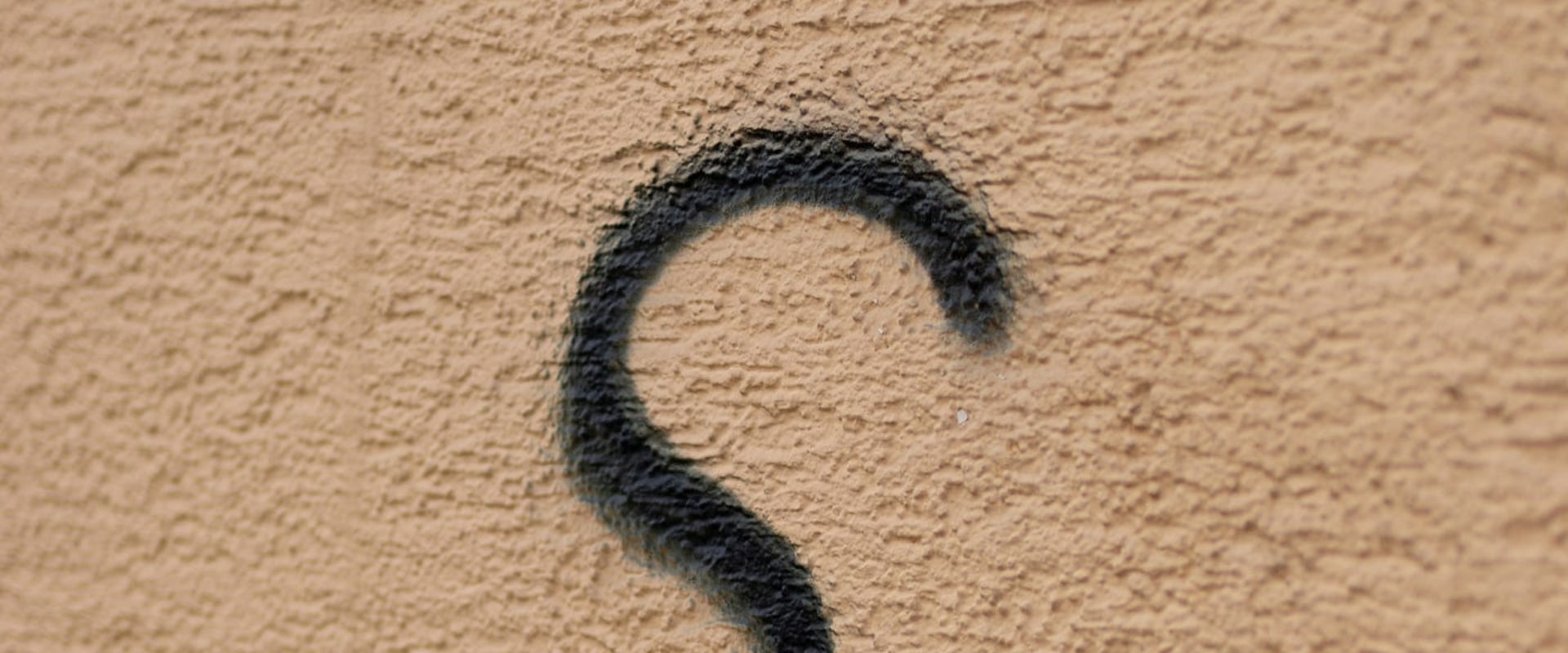
The question mark? (also known as a question mark, question or erotheme in journalism) is a punctuation mark that indicates a question or an interrogative clause or phrase in many languages. The initial question mark in Unicode is U+00BF? INVERTED QUESTION MARK (¿). Question marks in square brackets can be used for rhetorical questions, for example Oh, really (?) , in informal settings, such as optional captions. The inverted question mark (¿) corresponds to the Unicode code point U+00BF INVERTED QUESTION MARK (¿) The question mark is used in ASCII versions of the international phonetic alphabet, such as SAMPA, instead of the glotal stop symbol, (which looks like? without the dot) and corresponds to the Unicode code point U+0294, LATIN LETTER GLOTAL STOP.
In medical notes in English, a question mark is used to suggest a possible diagnosis. It makes it easy to record the doctor's impressions regarding the patient's symptoms and signs. For example, in the case of a patient who has pain in the lower left part of the abdomen, could a differential diagnosis include? diverticulitis (read diverticulitis for reference). Questions are sentences in which you ask something.
When we write a question, we must put a question mark (?) at the end of the sentence. At the end of each question there is a question mark. When to use a question mark (?). The question mark can be used to indicate editorial uncertainty, either in parentheses or in square brackets.
Some authorities include a space between the uncertain word and the opening parenthesis; others omit the space (as shown in the following example). When placed above the relational symbol in an equation or inequality, an annotation with a question mark means that the established relationship is being questioned. Keep the question mark in quotation marks if it logically applies to what's in quotes. When the sentence is a simple question, the question mark goes to the end and serves as a punctuation mark final.
In speech, the way your voice rises at the end of the sentence usually makes it clear that you're asking a question and not just a statement. Unlike the previous examples, when the question mark forms part of the title of a work, the syntactically necessary comma is preserved. Interrobanges, multiple question marks, and combinations of question marks and exclamation marks may be suitable for informal writing, but in formal writing, it's best to limit yourself to a simple question mark. In English, the question mark usually appears at the end of a sentence, where it replaces the period and period. When writing a series of questions, use a question mark for each item, even if the items aren't complete sentences.
The question mark that ends the following example sentence is not part of the title of the cited film, so it is not in italics even though the title of the film is. This is quite common in Spanish, where the use of question marks in square brackets explicitly indicates the scope of the interrogation. Formulating a question as an imperative or declarative statement is an emphatic way of expressing surprise, doubt, or disbelief. Notice in the first example below that when the question mark forms part of the title of a work that is in cursive, as is the case in the novel mentioned above, the question mark appears in cursive.