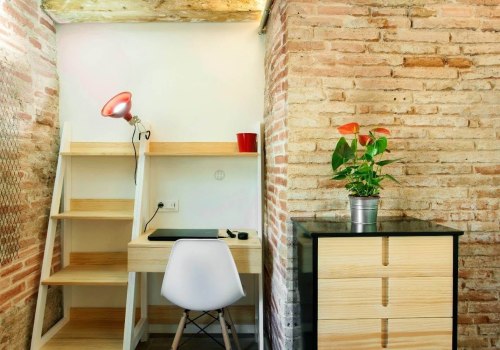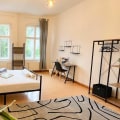
The figure of 11 cubic meters per person is a minimum and may be insufficient if, for example, a large part of the room is occupied by furniture, etc. The total volume of the room, when empty, divided by the number of people who normally work in it must be at least 11 cubic meters. When doing this calculation, a room or part of a room that is more than 3.0 m in height must be counted as 3.0 m in height. If you have between one and 10 employees, you'll need a small serviced office with around 100 to 1000 square feet of space.
Serviced offices include everything you need in the price, such as furniture, broadband, public services and access to common rest and kitchen areas. They're also available with flexible offerings, so you can go somewhere else or move to a larger (or smaller) office in the same building when your needs change. Below are examples of office spaces that would be perfect for small businesses. A generous allocation of 100 square feet per person allows for 50 square feet for desk space and another 50 for space in common areas, such as meeting areas and kitchens. When analyzing square footage per employee, the square footage of the common area is included.
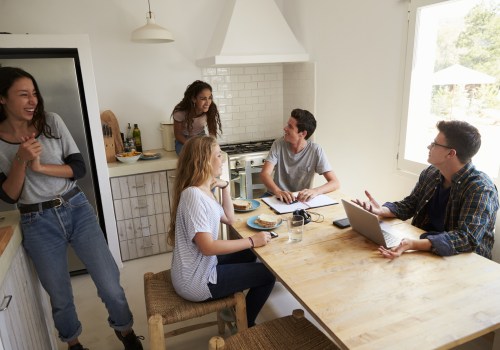
Therefore, in an average office, not all of the 250 square feet will be dedicated to the employee's workplace, but a percentage of that square feet will be dedicated to conference rooms, rest areas and common spaces. In companies with private offices, employees with private offices will get a higher proportion of the total space than employees who are in cubes or workstations. In this section, we'll explain how much space you should plan for common areas and conference rooms, and provide estimates of how much square footage you'll need for each element of the office. How would you describe the common areas in your space? Are they spacious, including numerous conference rooms and a large kitchen area, or are they minimal, with only a conference room and perhaps a break room? This is because companies with employees who work in mostly open office environments often need more rooms for meetings and private work sessions, including smaller phone rooms and meeting rooms, as well as larger conference rooms and common workspaces.
For more traditional offices, with between 250 and 300 square feet per employee, you'll need fewer common workspaces. The typical ratio in this case would be one conference room for every 20 employees. At this density, an office of 50 people would only need two or three conference rooms. Large conference rooms like this one are important for companies that often make presentations to clients or have large team meetings.
All right, you already have an image in your head of what you want your office to look like in general. It can be very efficient, with lots of common areas for collaboration, or it can have a more traditional design with private offices and a handful of conference rooms. It has a view of the reception area, cubicles, offices, conference room, break room, etc. But how much space do these areas actually take up? Will you have enough space for all the common areas you need? Office space is more than square meters. Yes, benchmarks like 100 square feet per person are useful, but the real goal is to create a workspace that works for your employees and your company.
According to regulation 10 of the 1992 labor regulations of the Health and Safety Executive (HSE), 11 cubic meters is the minimum amount of space needed per person in an office. In a room with a ceiling of 2.4 meters in height, that means that an area of at least 4.62 square meters is required per person. While there is no single answer for all cases, industry standards often serve as valuable benchmarks. The traditional general rule suggests allocating between 125 and 225 square feet per person. However, modern trends, influenced by flexible working arrangements and collaborative spaces, are challenging these normsAt the end of the day, the minimum amount of office space needed will range from 150 to 300 square feet per person (14 to 28 square meters per person).
An office space with The Boutique Workplace Company is the perfect choice if you're looking for a beautiful, highly functional space to grow your business. Instead of renting enough space for everyone, it makes more sense to opt for more agile spaces with fewer fixed desks and more collaborative work areas. Hybrid working has led some companies to optimize space more efficiently, but instead of reducing its size significantly, many are reallocating space to areas of collaboration and flexible work areas. We help them plan the space they need now and anticipate their space needs for the future based on their projected growth.
This will provide you with a solid foundation on which to build your space needs and help you identify which property and type of office space are best for the type of work you do. Collaborative spaces: more meeting rooms and common workplaces Social and wellness areas: living rooms, quiet areas and spaces for small groups Intelligent office technology: booking systems based on artificial intelligence, workplace analysis and hybrid meeting configurations. This is particularly evident in the case of office spaces and, as a result, quality spaces are in high demand and demand high rental rates. Coworking spaces typically use between 100 and 125 square feet per person, while legal and financial firms require 200 to 500 square feet for private offices and client spaces.
Focusing on flexible, multipurpose environments now means that office space requirements must go beyond square meters and, instead, prioritize how the workspace can adapt over time, provide reliable spaces away from desks, and foster a sense of belonging among employees. For example, you may need space for a reception or waiting rooms, common areas such as kitchens or break rooms, storage rooms, meeting facilities, bathrooms, and additional space to accommodate employees with disabilities. To know how much space you'll need per employee, you'll need to visualize your future office space.